The History of Korean Skincare: How K-Beauty Conquered the World
The history of Korean skincare is one of the most remarkable success stories in the global beauty industry. What began centuries ago as humble beauty rituals in the Joseon dynasty — women brushing rice water onto their faces and mixing ground mung beans into cleansing powders — has evolved into a multi-billion-dollar empire that dictates skincare trends from Seoul to New York, London to Lahore. Today, Korean skincare history isn’t just a story about products; it’s a story about philosophy, innovation, cultural soft power, and a nation that turned “skin-first” thinking into a worldwide movement.
In this article, we’ll walk through the complete Korean beauty industry history — from ancient herbal remedies to the Hallyu wave, from the invention of BB cream to the glass skin trend — and unpack exactly how Korean skincare became global. Whether you’re a K-beauty enthusiast or just curious about why your favorite serum comes from Seoul, this journey through time will change the way you look at your skincare shelf.
🏯 Ancient Roots: Traditional Korean Beauty Practices
Long before sheet masks and snail mucin, traditional Korean beauty practices were deeply rooted in nature and holistic wellness. During the Joseon dynasty (1392–1897), beauty was considered a reflection of inner health and virtue. Clear, luminous skin — often described as “jade-like” — was the ultimate beauty ideal, and Korean women developed remarkably sophisticated rituals to achieve it.
Women of the Joseon era washed their faces with rice water, prized for its brightening and softening properties — an ingredient so effective that it still stars in modern formulas today. Ground mung beans, known as nokdu, were used as a gentle exfoliating cleanser, while camellia oil nourished both skin and hair. Apricot and peach extracts helped fade spots, and honey masks delivered deep hydration during harsh Korean winters.
This era also gave birth to Hanbang skincare — the use of traditional Korean herbal medicine in beauty. Ingredients like ginseng, green tea, mugwort, and fermented botanicals were believed to balance the skin from within. Remarkably, these Joseon dynasty beauty rituals weren’t about masking flaws with heavy makeup; they focused on nurturing healthy skin as the foundation of beauty. This skin-first philosophy — born centuries ago — would later become the defining principle that separated Korean skincare from Western beauty culture, where makeup traditionally took center stage.
The legacy is visible everywhere today. Luxury brands like Sulwhasoo built their entire identity on Hanbang heritage, while modern favorites such as the Beauty of Joseon Glow Deep Serum with rice and arbutin literally carry the dynasty’s name and ingredients into the 21st century.
🏭 The 20th Century: Birth of the Korean Cosmetics Industry
The modern Korean beauty industry history begins in 1945, when Suh Sung-whan founded a small company selling camellia hair oil made by his mother in Kaesong. That company would become Amorepacific — today one of the largest beauty conglomerates in the world and the parent of iconic brands like Laneige, Innisfree, Sulwhasoo, and Etude House. The Amorepacific history mirrors Korea’s own transformation: from post-war scarcity to technological powerhouse.
Through the 1960s and 70s, as South Korea industrialized at breathtaking speed, its cosmetics industry grew alongside it. The government protected domestic beauty companies from foreign competition, giving Korean brands room to develop their own research capabilities. By the 1980s and 90s, cosmetic R&D in Korea had become fiercely competitive — companies raced to launch innovative textures, delivery systems, and ingredients faster than anyone else in Asia.
This hyper-competitive domestic market created something unique: Korean consumers became the most demanding skincare customers on earth. They expected visible results, elegant textures, beautiful packaging, and affordable prices — all at once. Brands that couldn’t innovate quickly simply died. This pressure-cooker environment is precisely why the evolution of Korean skincare moved so much faster than the West’s. While Western brands might reformulate a moisturizer every five years, Korean brands were launching entirely new product categories every season.
Two inventions from this innovation engine would eventually change global beauty forever:
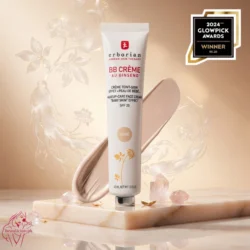
BB cream (popularized in Korea, early 2000s): Originally a German dermatological balm, Korean brands reformulated it into a lightweight, skin-perfecting hybrid. When Korean actresses credited BB cream for their flawless complexions, it exploded — and brands like Missha turned it into a global phenomenon with products like the Missha M Perfect Cover BB Cream.
Cushion compact foundation (2008): Amorepacific’s IOPE brand created the world’s first cushion compact — foundation soaked into a sponge for portable, buildable coverage. It became one of the most copied beauty inventions in history, with Western giants like Lancôme and Dior eventually launching their own versions.
🌊 The Hallyu Wave: When Culture Carried Skincare Across Borders
You cannot explain the rise of K-beauty without understanding the Hallyu wave — the global surge of Korean pop culture that began in the late 1990s and reached full force in the 2010s. As K-dramas swept across Asia and K-pop idols like BTS and BLACKPINK conquered global charts, millions of international fans asked the same question: “How do Korean celebrities get such flawless skin?”
This was cultural soft power of Korea in action. Every K-drama close-up was an unintentional skincare advertisement. Fans didn’t just want to listen to Korean music — they wanted to eat Korean food, learn the language, and most of all, achieve that dewy, poreless “Korean glow.” The K-pop and K-drama influence on beauty turned actors and idols into skincare ambassadors, and the products they used sold out within hours of being identified by fans online.
The timing was perfect. Social media platforms — YouTube, Instagram, and later TikTok — were exploding at exactly the same moment. Beauty influencers and social media marketing became the delivery mechanism that traditional advertising never could be. Skincare bloggers filmed themselves trying the famous 10-step Korean skincare routine, and the format was irresistibly shareable: exotic products, satisfying textures, visible transformations. The routine itself — cleanser, toner, essence, serum, sheet mask, moisturizer, and more — was a revelation to Western audiences accustomed to a simple three-step regimen.
If you’re new to this world and want to understand the full philosophy behind it, our detailed guide on what K-beauty actually is breaks it down beautifully for beginners.
🚀 K-Beauty Global Expansion: The Breakthrough Decade (2011–2020)
The 2010s were the decade the K-beauty global expansion went from trend to permanent industry force. Several key milestones defined this Korean skincare trends timeline:
2011–2014: The American gateway opens. Sephora and Urban Outfitters began stocking Korean brands, and the Sephora K-beauty launch legitimized the category for mainstream Western shoppers. Specialty e-commerce sites like Soko Glam and Peach & Lily — founded by Korean-American entrepreneurs — became cultural translators, explaining essences, ampoules, and double cleansing to curious Western audiences. This beauty e-commerce growth removed geography as a barrier entirely.
2014–2016: Sheet masks and snail mucin go mainstream. The sheet masks origin story traces back to Korea and Japan, but Korean brands perfected and democratized them — turning a spa luxury into an affordable daily treat. Meanwhile, snail mucin skincare became K-beauty’s most famous “weird but wonderful” export. Western media couldn’t resist headlines about snail slime, and products like COSRX’s snail essence rode that curiosity to cult status. Today, the COSRX Advanced Snail 96 Mucin Power Essence remains one of the best-selling Korean products on the planet — you can read our full honest review of the snail essence here.
2017–2019: The glass skin era. The glass skin trend — skin so hydrated and smooth it appears translucent like glass — became the defining beauty aspiration of the late 2010s. It perfectly captured the skin-first philosophy: the goal wasn’t makeup coverage, but skin so healthy it needed none. Layering lightweight hydrating products, the double cleansing method, and gentle exfoliation became standard vocabulary for skincare lovers worldwide. Our step-by-step guide on how to double cleanse the Korean way explains the technique that started it all.
The Western industry responds. Perhaps the greatest proof of K-beauty’s influence is how thoroughly Western brands copied it. Essences, sleeping masks, cushion foundations, hydrating toners, centella and cica lines — all K-beauty innovations now sit in every Western brand’s catalog. The Korean skincare vs Western skincare debate essentially ended with the West adopting Korea’s playbook.
🔬 The Science Behind the Success: Innovation as Identity
Marketing and culture opened doors, but Korean dermatology and skincare science kept them open. The Korean cosmetics industry growth has always been powered by genuine skincare ingredient innovation — and this is where K-beauty earns lasting consumer trust rather than fleeting hype.
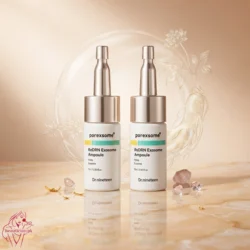
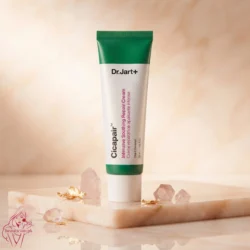
Korean labs pioneered or popularized ingredients that are now global staples. Fermented skincare ingredients — inspired by Korea’s fermentation food culture — deliver smaller molecules that absorb more effectively. Centella asiatica (cica) became the gold standard for soothing sensitive skin. Ginseng, green tea, rice water, mugwort, heartleaf, and propolis moved from Hanbang tradition into clinically supported modern formulas. More recently, cutting-edge actives like PDRN (salmon DNA) and micro-needle “reedle shot” technology show that Korean R&D continues to run years ahead of the curve — a trend we explored in depth in our article on why PDRN skincare is the next big trend.
Here’s a quick look at how key eras shaped what’s on your shelf today:
Era
Defining Innovation
Global Impact
Joseon Dynasty
Rice water, Hanbang herbs, mung bean cleansing
Foundation of skin-first philosophy
1945–1990s
Amorepacific founded; domestic R&D race begins
Built industrial & scientific base
Early 2000s
BB cream reinvented in Korea
First global K-beauty product
2008–2015
Cushion compacts, sheet masks, snail mucin
K-beauty enters Sephora & Western retail
2016–2020
Glass skin, cica, fermented ingredients
Western brands adopt K-beauty formulas
2021–Present
PDRN, exosomes, micro-needling tech, clean beauty
Korea leads global skincare science
The numbers tell the story just as clearly. South Korea is now consistently among the top cosmetics exporters in the world, with the K-beauty export market reaching well over $10 billion annually and Korean brands capturing significant global beauty market share in the US, Southeast Asia, the Middle East, and Europe. Remarkably, Korea achieved this while competing against beauty giants from France, the US, and Japan — countries with far longer cosmetic export histories.
🌍 Why Korean Skincare Is Popular Worldwide Today
So what explains this enduring dominance? Why hasn’t K-beauty faded like other beauty fads? The answer lies in a combination of factors that align perfectly with modern skincare consumer behavior:
Results at accessible prices: A high-performance Korean serum often costs a fraction of its Western luxury equivalent, without compromising on formulation quality.
Gentle, barrier-friendly philosophy: K-beauty’s focus on hydration, soothing, and prevention resonates with the global shift away from harsh, stripping products — perfectly aligned with the clean beauty movement.
Constant innovation: Korean brands launch trends; others follow. Consumers know Seoul is where “next” happens first.
Inclusivity of concern, not just tone: K-beauty organizes products around skin concerns — dullness, barrier damage, dark spots — making it universally relevant across ethnicities and climates.
This universality matters enormously in markets like Pakistan, where humidity, sun exposure, and melanin-rich skin create specific needs. Korean formulas — lightweight sunscreens, brightening niacinamide serums, soothing cica creams — happen to suit South Asian skin beautifully, which is why demand here has exploded. If you’re building your own regimen, our guide to the Korean skincare routine for beginners in Pakistan is the perfect starting point, and our roundup of the top Korean skincare products in Pakistan highlights the bestsellers worth your money.
It’s also worth noting how Korean beauty standards history has evolved alongside the industry. While earlier eras emphasized a single narrow ideal, modern K-beauty increasingly markets skin health rather than a specific look — glass skin, after all, is about luminosity and hydration, achievable by anyone. This concern-based, health-focused messaging is a major reason Western adoption of K-beauty has been so complete and so lasting.
🇵🇰 K-Beauty’s Journey to Pakistan — and Your Shelf
The final chapter of how Korean skincare became global is being written in emerging markets like ours. Over the past few years, Pakistani consumers have embraced K-beauty with extraordinary enthusiasm — driven by the same forces that conquered the West: K-dramas on Netflix, TikTok skincare virality, and word-of-mouth about real results. Brands like COSRX, Beauty of Joseon, Anua, SKIN1004, Laneige, and Medicube are now household names among Pakistani skincare lovers.
The challenge in newer markets, however, is authenticity — counterfeit Korean products are unfortunately common. That’s why buying from trusted retailers matters so much. If you want to explore genuine products, our complete guide on where to buy authentic Korean skincare in Pakistan walks you through everything, and you can browse the full range of original K-beauty products directly at the Beautician.pk shop.
💡 Conclusion: A Legacy Centuries in the Making
The history of Korean skincare is ultimately a story of patience and philosophy meeting science and speed. From Joseon-era rice water rituals to Amorepacific’s laboratories, from BB cream to PDRN serums, Korea transformed a cultural belief — that healthy skin is the truest beauty — into the world’s most influential skincare movement. The K-beauty global market shows no signs of slowing down; if anything, Korea’s grip on skincare innovation is tightening with every new breakthrough.
The most beautiful part? This history isn’t locked in a museum. Every time you pat in an essence, press on a sheet mask, or double cleanse at night, you’re participating in a tradition that stretches back centuries — refined by science, carried across oceans by culture, and now sitting right on your bathroom shelf.
✨ Ready to experience authentic K-beauty yourself? Explore 100% original Korean skincare — from cult-favorite serums to viral sunscreens — at Beautician.pk, Pakistan’s trusted destination for genuine Korean beauty products, delivered to your doorstep.
❓ Frequently Asked Questions (FAQs)
Q1: When did Korean skincare start? Korean skincare traditions date back centuries to the Joseon dynasty (1392–1897), when women used rice water, mung bean powder, camellia oil, and Hanbang herbal ingredients. The modern Korean cosmetics industry began in 1945 with the founding of Amorepacific.
Q2: How did Korean skincare become popular globally? K-beauty went global through a combination of the Hallyu wave (K-pop and K-dramas), social media virality, innovative products like BB cream and sheet masks, the Sephora K-beauty launch in the early 2010s, and consistently affordable, science-backed formulations.
Q3: What is the skin-first philosophy in K-beauty? It’s the core Korean belief that healthy, well-nurtured skin is the foundation of beauty — prioritizing hydration, prevention, and barrier care over covering imperfections with makeup. This philosophy dates back to Joseon-era beauty ideals.
Q4: What is Hanbang skincare? Hanbang refers to traditional Korean herbal medicine applied to skincare, using ingredients like ginseng, green tea, mugwort, and fermented botanicals. Luxury brands like Sulwhasoo and modern brands like Beauty of Joseon are built on Hanbang heritage.
Q5: Which Korean inventions changed the global beauty industry? The most influential K-beauty innovations include modern BB cream, the cushion compact foundation (2008), mass-market sheet masks, snail mucin essences, and the glass skin routine — all widely copied by Western brands.
Q6: Is Korean skincare suitable for Pakistani skin? Yes. K-beauty’s gentle, hydration-focused, concern-based formulas — like niacinamide serums, cica creams, and lightweight sunscreens — work exceptionally well for Pakistani skin tones and the local hot, humid climate.